
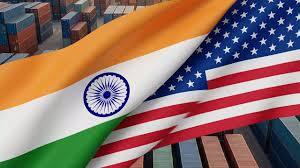
The next few days could be crucial for India-US trade relations as Union Commerce and Industry Minister Piyush Goyal prepares for high-level discussions with US Trade Representative Jamieson Greer in New Delhi.
The talks come as both countries work to finalize the first phase of the proposed India-US Bilateral Trade Agreement (BTA) before a key tariff deadline on July 24. The meeting follows recent negotiations between officials from both sides and renewed momentum after discussions between Prime Minister Narendra Modi and US President Donald Trump during the G7 Summit.
With trade, tariffs and market access on the table, the outcome of these discussions could have significant implications for businesses and exporters in both countries.
India and US Push to Finalize Interim Trade Agreement
A major focus of the upcoming talks will be the first phase of the bilateral trade agreement, often described as an interim trade deal.
According to government officials, negotiations have made substantial progress in recent weeks. The objective now is to resolve the remaining issues and finalize the framework that could pave the way for a broader trade agreement in the future.
Commerce Minister Piyush Goyal recently indicated that both sides are working toward closing outstanding matters and signing the first phase of the agreement in the coming weeks.
India Seeks Better Tariff Advantage for Exporters
One of India’s key priorities is securing a competitive advantage for its exporters in the US market.
The global tariff environment has changed considerably in recent months, reducing some of the benefits Indian exporters were expected to receive under earlier trade discussions.
India is reportedly seeking better market access and more favorable tariff treatment compared to competing manufacturing and export hubs such as:
- Vietnam
- Bangladesh
- Indonesia
- Other ASEAN countries
Trade experts believe that gaining a tariff advantage could boost sectors such as textiles, engineering goods, pharmaceuticals, electronics and auto components.
Why the July 24 Deadline Matters
The urgency surrounding the negotiations is largely due to the upcoming July 24 tariff deadline.
The United States had imposed a temporary 10% tariff on imports from several trading partners under a transitional arrangement. That framework is set to expire on July 24, potentially leading to changes in tariff rates and trade conditions.
As a result, both countries are keen to reach an understanding before the existing arrangement ends.
Piyush Goyal recently stated that he would be pleased to see the first phase of the India-US trade deal concluded before the deadline.
Section 301 Investigation Remains a Key Factor
The negotiations are also taking place while the United States continues to conduct Section 301 investigations involving multiple countries, including India.
Section 301 of the US Trade Act allows Washington to impose tariffs or trade restrictions if it determines that a country’s trade policies unfairly impact American businesses.
Although the investigations remain ongoing, Indian officials have expressed confidence that they will not prevent the successful completion of the trade agreement.
New Delhi has maintained that any concerns raised during the process can be addressed through dialogue and negotiations.
Market Access, Energy Purchases and Investment Opportunities
The proposed trade pact is expected to cover more than just tariffs.
India has reportedly offered to reduce or eliminate duties on several American products, including:
- Tree nuts
- Fresh fruits
- Soybean oil
- Wine and spirits
- Industrial goods
In return, India is expected to increase purchases of key US products and services.
Reports suggest New Delhi may consider buying up to $500 billion worth of US goods over the next five years, including:
- Energy products
- Aircraft and aviation components
- Technology equipment
- Precious metals
- Coking coal
Experts also expect the agreement to include provisions related to:
- Investment flows
- Rules of origin
- Supply chain cooperation
- Strategic sector partnerships
Why the Trade Deal Matters
The United States remains one of India’s largest trading partners.
In FY26:
- India’s exports to the US stood at $87.3 billion
- Imports from the US were valued at $52.9 billion
- India recorded a trade surplus of $34.4 billion
A successful agreement could provide greater certainty for exporters, improve market access, attract investment and strengthen economic ties between the two countries.
What Happens Next?
With the July 24 deadline fast approaching, the upcoming meeting between Piyush Goyal and Jamieson Greer could prove decisive.
If both sides are able to resolve the remaining issues, India and the United States may finally move closer to signing the first phase of a long-awaited bilateral trade agreement—an outcome that could reshape trade relations between the world’s fifth-largest and largest economies.